An Complete Manual on Picking & Pairing Drift-Spec Steering Angle Components and Optimized Damper Components
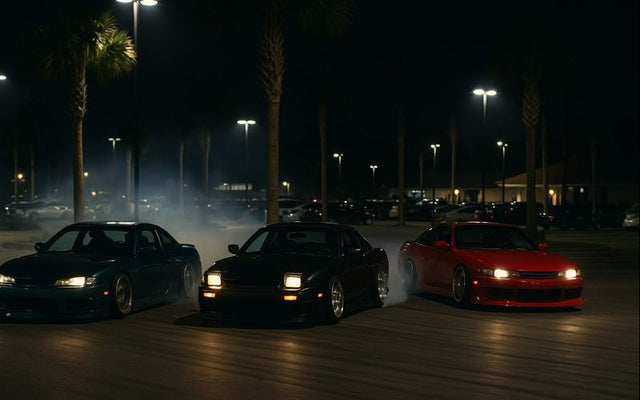
Within the high-stakes realm of contemporary serious oversteer competition, success is far more than purely a product of raw torque or pilot aggression. Rather, it has evolved into a intricate engineering challenge that demands a scrupulous marriage of selecting a time-tested vehicle platform, equipping it with the correct performance hardware, and, most essentially, comprehending its dynamic characteristics on the course through cutting-edge suspension tuning applications. This comprehensive manual acts as your master plan from the initial concept of a project car through to the final engineering-refined adjustments that elevate a capable vehicle into a consistent winner. We will thoroughly explore the methodical process of vehicle alignment optimization, demonstrating how a state-of-the-art suspension tuning tool like precise measurement hardware removes approximation and provides unmatched clarity into your vehicle's true behavior.
The cornerstone of any successful drift car is, without question, the platform itself. A select group of vehicles have attained legendary status within the worldwide oversteer culture due to their built-in balance, robust build quality, and the immense range of specialist components available. Picking the optimal starting point is the primary and most important selection a builder will make. For instance, the BMW E36 is widely regarded as among the finest overall drift platforms of history. Its almost ideal 50/50 weight distribution, alongside a RWD configuration and bulletproof six-cylinder motors, forms a chassis that is both forgiving for beginners and incredibly effective in the control of a pro driver. The evolution of this philosophy, the BMW E46 platform, builds upon these strengths with a more refined chassis, wider track for greater confidence, and yet increased turning capability directly from the manufacturer. A different powerful contender in the professional scene is the Chevrolet Corvette C6.
This muscle-derived performance car introduces a unique combination of strengths to the sideways discipline, such as a lightweight alloy structure, a transaxle-style gearbox and differential unit that contributes to an perfect balance, and the immense thrust of a big LS-series V8 engine. This combination renders it an absolute force on track, able of initiating and holding long angles with apparently minimal use of acceleration. For those looking for exceptional bang-for-the-buck, the Nissan 350Z stands out as a excellent choice. It is delivered from the manufacturer with a stiff platform, a competent OEM LSD, and the free-revving V6 powerplant that delivers plenty of horsepower and torque for practicing and progressing in the discipline. Its successor, the 370Z model, brings further improvements in body strength, steering geometry, and overall powerplant performance, solidifying its position as a common pick among serious drivers. Additional historic vehicles that deserve consideration encompass the agile rotary-powered Mazda FC RX-7, the ever-present Nissan S13, the American Ford Mustang SN95, the modern E90 3 Series, and the tiny yet surprisingly playful and forgiving Mazda MX-5. All of these cars gives a unique array of traits, complexities, and possibilities, but they all possess the fundamental ingredients required to be transformed into a capable drift machine.
However, choosing the optimal platform is just the starting point. To access the complete performance of every of these machines, major changes to the steering geometry and suspension systems are utterly essential. This is where the world of performance drift-spec hardware comes into sharp importance. The most most transformative upgrade for a purpose-built drift car is the integration of a drift-spec drift angle kit. These sophisticated assemblies, for example those engineered by specialist companies like SLR Speed, are engineered to radically increase the chassis's possible turning lock. A factory street car is severely constrained in how far its tires can rotate, a engineering compromise for on-road use. In oversteer driving, but, extreme countersteering is frequently needed to manage and sustain a drift. An modification kit exchanges the OEM uprights, rod ends, and sometimes A-arms with pieces that permit the steered wheels to attain angles over 70 or even 80 °, as opposed to a average factory limit of around 40 to 50 degs.
This tremendously expanded steering angle offers the driver with significantly greater control during a slide, enabling it to be considerably more straightforward to start a slide, hold it through a extended corner, and switch seamlessly from one direction to the opposite. The contrast in drivability is truly transformative. Coupled with a properly specified modification is the every bit as essential modification to the vehicle's suspension. Off-the-shelf or even high-end sport dampers are generally not engineered for the unique and extreme requirements of drifting. A purpose-built set of coilovers is of utmost importance. These engineered coilovers incorporate specific valving and spring stiffness that are optimized for the violent load shifting that is typical of sliding. When a operator begins a drift, the car's weight is shifted violently to the outside of the bend. Optimal competition suspension control this shift in a controllable fashion, permitting the vehicle to settle rapidly and offering the pilot clear feel through the wheel and seat. They also provide precise setting of ride height, rebound and compression rate, and corner weighting, which are all fundamental parts of dialing in the chassis's dynamics to a specific circuit or competition approach. Together, a precision-engineered angle modification system and a properly specified system of competition suspension units form the absolute physical cornerstone upon which all subsequent optimization is based.
Once the fundamental components is in place, the following vital stage in the project is the meticulous tuning of the chassis's wheel angles. This is the world of vehicle alignment optimization, a procedure that can appear intimidating to the newcomer but is, in reality, the secret to transforming a set of capable parts into a unified and consistent whole. The most critical element of suspension geometry for oversteer is certainly negative camber. Wheel camber is the angle of the wheel compared to the vertical line when viewed from the forward of the car. If the top edge of the wheel is angled towards the car, this is referred to as camber-in. In oversteer driving, an inward tilt on the front axle tires is generally used and is regarded as necessary. The reason is fundamentally tied to vehicle dynamics.
When a vehicle is turning at extreme sideways angles, the body leans to the outer of the corner. This body roll makes the outside front tire to reduce its optimal contact patch with the track surface. By introducing an inward tilt, the tire is pre-angled to counteract this tilt. As the chassis tilts into the bend, the outside front tire gains a better contact patch on the track, maximizing its traction at the exact point when it is needed most for directional command. Commonly, front camber settings for a serious drift machine range from approximately -3 degrees to as extreme as -5 degrees or even beyond, contingent on the details of the car geometry, rubber choice, and driver preference. The back wheels also use negative camber, but the values are usually more conservative and less aggressive than the front axle. Excessive inward lean at the back can cause the vehicle to extremely prone to oversteer and hard to manage on throttle use, as it diminishes the available tire footprint of the driven wheels during forward throttle application. Therefore, rear adjustments are frequently in the range of -1 degree to -3 degrees, achieving a delicate compromise between giving enough cornering bite to aid in entering and holding the slide while still preserving good grip for exiting the bend. alignment is merely one element of the larger tuning equation, which additionally encompasses toe, self-centering steering, and steer correction modification.
Toe angle describes the orientation of the tires when looked at from the top. Inward toe means the leading edges of the wheels are closer together than the rear edges, while toe-out means the converse. For oversteer, a small amount of front negative toe is often run to quicken the initial steering response, making the chassis feel more nimble and willing to begin a slide. Rear axle toe is generally set to neutral or a extremely slight amount of inward toe to foster stability under acceleration. Caster is the forward or backwards inclination of the suspension pivot when looked at from the lateral of the vehicle. Increased caster enhances self-centering and high-speed stability, and it also adds to camber gain during cornering, which is highly useful. Adjusting these values is a detailed dance where a adjustment to a single setting can and will influence the remaining parameters. The conventional method for dialing in a chassis's suspension geometry for sliding has long been a time-consuming endeavor of trial and error. A driver or team would make a modification based on a hunch, drive the vehicle on track, use the operator's subjective sensation and impressions, and then introduce a further tweak. This process would repeat over and over until the vehicle felt "right" or the allotted practice period ran out. This approach is not only extremely slow in terms of man-hours and tires, fuel, and parts, but it is furthermore deeply inaccurate.
Driver feel is a notoriously subjective data source, colored by countless variables such as exhaustion, varying track conditions, weather, and merely the focus of the operator on that particular session. What feels "loose" on one lap might feel "pushing" on the subsequent pass, causing contradictory feedback and ineffective changes. This long-standing limitation in car suspension tuning is precisely where state-of-the-art engineering tools has made its mark to revolutionize the methodology.
The development and integration of advanced suspension tuning applications has brought about a completely new drift suspension tuning guide paradigm for tuning and optimizing competitive drift machines. These tools, represented by groundbreaking solutions like modern telemetry hardware, work by actively recording the live mechanical movement of the chassis as it is operated on the circuit. In contrast to depending on subjective feedback, these devices collect quantifiable information on key variables such as damper compression and extension, individual tire rotation, G-force loading, wheel angle, and accelerator and brake pedal application. This collected data stream is then analyzed by powerful software that can plot and analyze the information in a actionable way. For the first time, engineers and teams can visualize precisely what the chassis is performing at every point of a lap. This ability transforms the whole suspension tuning procedure. Imagine the particular goal of dialing in the front negative camber for a given vehicle. Instead of making a change from -3 degrees to -3.5 degrees and then testing multiple runs to try and "sense" a change, a suspension tuning tool can give instant and definitive feedback. The application can display in a chart how the suspension's contact patch is behaving during the most important stages of a angle: turn-in, holding the angle, and transition. It can show if the existing angle is enabling the loaded tire to maintain ideal grip or if the tire is working inefficiently on its external edge.
The software can then provide fact-based recommendations for change. Perhaps the data indicates that the tire is even stressing its edge at -3.5 degrees of negative camber, suggesting that an increase to angle, say -4 degrees, might be beneficial. On the other hand, the information might show that the tread is failing to coming up to temperature or that the inside edge is wearing too quickly, which could suggest that there is too much negative camber and a modest reduction back to -3.2 degrees would be better optimal. This degree of granularity and useful intelligence was literally unattainable in the time of vehicle dynamics tool pure seat-of-the-pants setup.
The benefit of utilizing a comprehensive suspension tuning tool reaches well beyond merely dialing in camber. It functions as an priceless coilover setup tips that is specific to your exact vehicle. When setting the rebound and compression settings on your suspension, rather than relying on vague tips or mimicking another team's numbers, you can employ the software to observe how the chassis is reacting in reaction to your tweaks. The software can display the wheel movement path over a lap, revealing if the coilovers are controlling the chassis motion optimally or if they are permitting the vehicle to oscillate too much after a flick. It can assist in diagnosing issues like hitting the bump stops or excessive extension, allowing you to make educated adjustments to spring preload, rebound/compression rates, or stance. This process translates equally to the detailed process of car alignment tuning. In addition to drift suspension tuning guide camber angle, the system can provide data into how modifications to toe settings and caster are affecting the chassis's balance during different maneuvers of a slide. For instance, it can allow you to find the ideal amount of front negative toe for your individual steering configuration and driving technique by analyzing the quickness of turn-in reaction and the predictability of the chassis at lock steering angle. This transforms the software an exceptionally powerful vehicle dynamics manual that is constantly informed by the real-world behavior of your personal chassis on the circuit. It elevates the entire process from a subjective skill into a repeatable optimization process.
Furthermore, the application of a system like modern telemetry is in no way limited to professional engineers with vast funding. For the club-level driver, it functions as an powerful equalizer. It in essence gives the driver with the analysis of a professional dynamics engineer without the typical expense. It speeds up the tuning process by delivering definitive answers to problems that would traditionally take years of experience to understand. A builder can learn how their specific chassis behaves to specific adjustments, developing a deeper understanding of suspension theory in the journey. It furthermore opens up advanced chassis dynamics principles, allowing anyone with the drive to perfect their machine to achieve it in a efficient and productive fashion. This is especially important in a activity like oversteer competition, where tuning knowledge has traditionally been a closely guarded commodity among top drivers. Now, that knowledge can be in the hands of any motivated enthusiast.
In summary, the path to engineering and dialing in the ideal competitive drift machine is a comprehensive project that perfectly combines classic engineering wisdom with cutting-edge data solutions. It begins with the wise pick of a proven car, followed by the installation of non-negotiable performance hardware like drift-spec steering angle kits and expertly specified competition adjustable dampers. The process then moves into the intricate phase of car suspension tuning, where parameters like camber, toe setting, and caster angle are meticulously configured to suit the chassis's modified hardware and the driver's individual needs. Finally, and what really separates the modern approach from the old ways, is the adoption of a sophisticated drift telemetry software. This platform removes the uncertainty and inefficiency of purely subjective setup by delivering quantifiable, real-time data on how the vehicle is really behaving. It acts as an incredible diagnostic aid, a comprehensive drift suspension tuning guide, and a comprehensive chassis development system. As a complete package, this integrated approach leads to that all component of the competition vehicle—from the pick of the platform to the final click on the damper—is optimized for ultimate competitiveness on the competition venue. It represents the total progression of the art of oversteer driving, merging raw car control with surgical vehicle setup to build the ultimate effective machines imaginable.